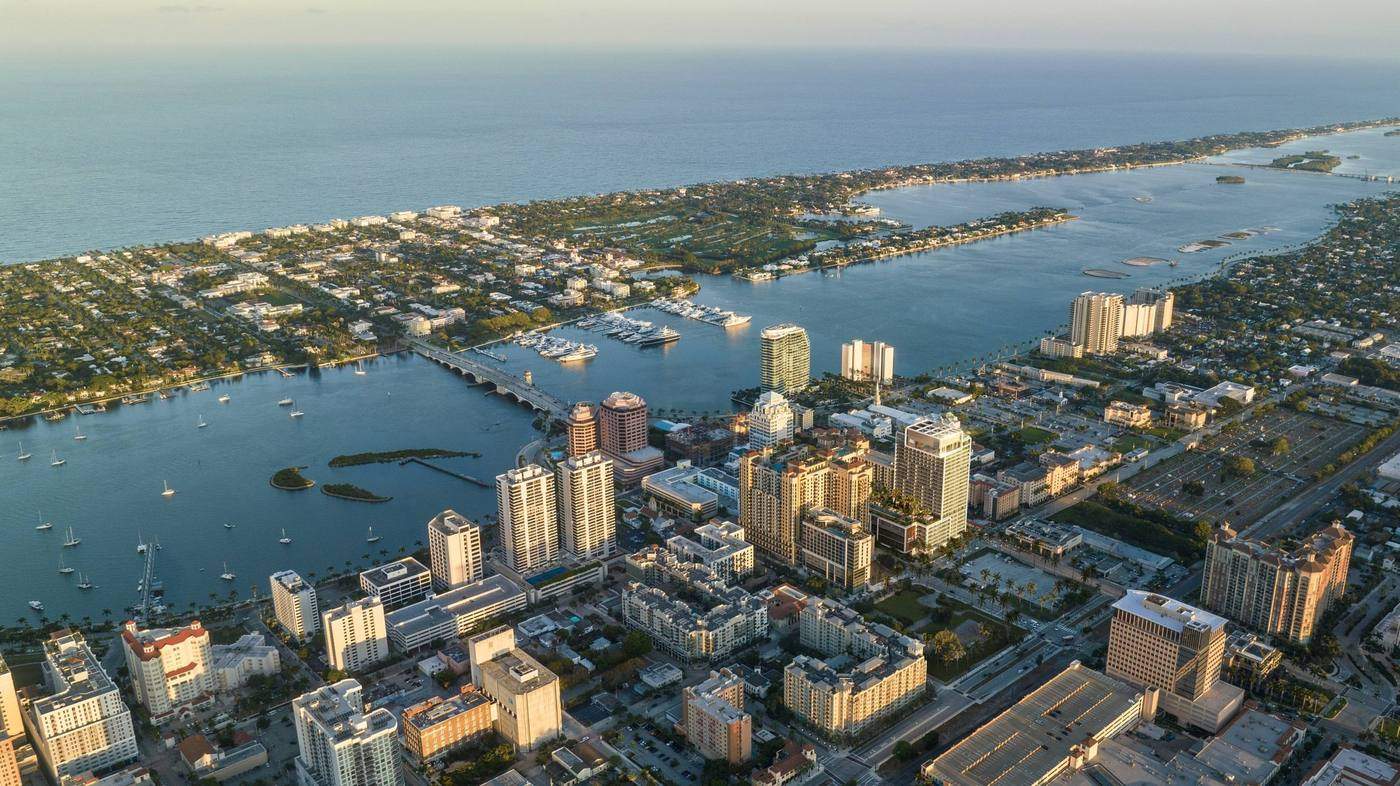
The two ZIP codes on either side of the Intracoastal downtown — Palm Beach (33480) and West Palm Beach's downtown core (33401) — are both overwhelmingly condo markets. Both lean heavily condo, though the directory data we have is scoped a little differently for each, which is worth being upfront about.
The numbers, side by side
A directory of registered community associations for Palm Beach, FL (33480) lists 75 communities in total:
- Condominium associations: about 66
- Homeowners associations: about 5
- Property owners associations: about 2
- Townhome associations: about 1
- Unclassified entities: about 1
That puts condos at roughly 88% of registered associations on the island — more than ten condos for every HOA.
The same directory's listing for West Palm Beach runs citywide rather than ZIP-by-ZIP, so these figures cover the whole city, not 33401 alone — but downtown's high-rise core is a large share of what drives the mix. Across 739 registered communities:
- Condominium associations: about 558
- Homeowners associations: about 109
- Property owners associations: about 42
- Unclassified entities: about 17
- Townhome associations: about 13
That's roughly 75% condo citywide — lower than Palm Beach's 88%, but still three condos for every HOA.
Why both markets lean condo — for different reasons
Palm Beach is a narrow barrier island with a hard limit on land: a dense band of oceanfront and Intracoastal condominium buildings alongside large single-family estates, many of which aren't part of any HOA at all. There's little of the large-lot, amenity-community footprint that produces HOAs and POAs elsewhere in the county.
Downtown West Palm Beach leans condo for a different reason — it's an urban core that's grown vertically. The skyline in the photo above is mostly residential and mixed-use high-rises built in and around downtown over the last two decades, and high-rise construction is almost always condominium ownership, not HOA. Drive a few miles out from the downtown core and the city's mix opens up considerably; it's the dense center that pulls the citywide number toward condo.
What a condo-heavy market means for the books
- Reserve work is almost all structural. Where HOAs are scarce, the reserve conversation is overwhelmingly about condominium building components — roof, structure, plumbing, electrical — and Florida's SIRS requirement for buildings three stories or taller, rather than road, perimeter wall, or amenity reserves.
- Resale and estoppel volume runs higher relative to the association count. Condominium units turn over through sale more often than single-family HOA lots in a comparable market, and every sale needs a current estoppel certificate before closing. A board (or whoever handles its books) that can turn those around quickly isn't just being helpful — it's removing a real bottleneck from closings.
- There's less "typical HOA" accounting template to fall back on. With HOAs this outnumbered in both ZIPs, a condo board benefits from accounting built around condominium-specific requirements from the start, not adapted from HOA-oriented software or a generic chart of accounts.
A quick self-check for 33480 or 33401 condo boards
- Is your reserve schedule built around your building's actual structural components and SIRS status, not a generic condo template?
- Do you know your current estoppel-certificate turnaround time, and has it ever held up a closing?
- Can your accountant produce a current estoppel certificate without digging through records that aren't kept current between requests?
- If your building has both operating and reserve accounts, are they clearly separated in your monthly financials — not just in year-end totals?
None of this is unique to either ZIP — but the concentration is unusual, even for Palm Beach County. When most of the associations in a market are condos, the accounting partner handling them should be built around condo work specifically, not HOA work with condo features bolted on. See our full breakdown of West Palm Beach HOA & condo accounting for more on how we handle both.
Need an estoppel certificate turned around quickly, or a second look at your reserve schedule?
We handle both condo and HOA accounting across Palm Beach County, including estoppel requests. Happy to take a look at how your building currently handles either.
This article is for general educational purposes. Community counts are drawn from a public community-association directory and are approximate as of the publish date above. This is not legal, insurance, or accounting advice for any specific association — confirm the details that apply to your building with your association's legal counsel and accountant.